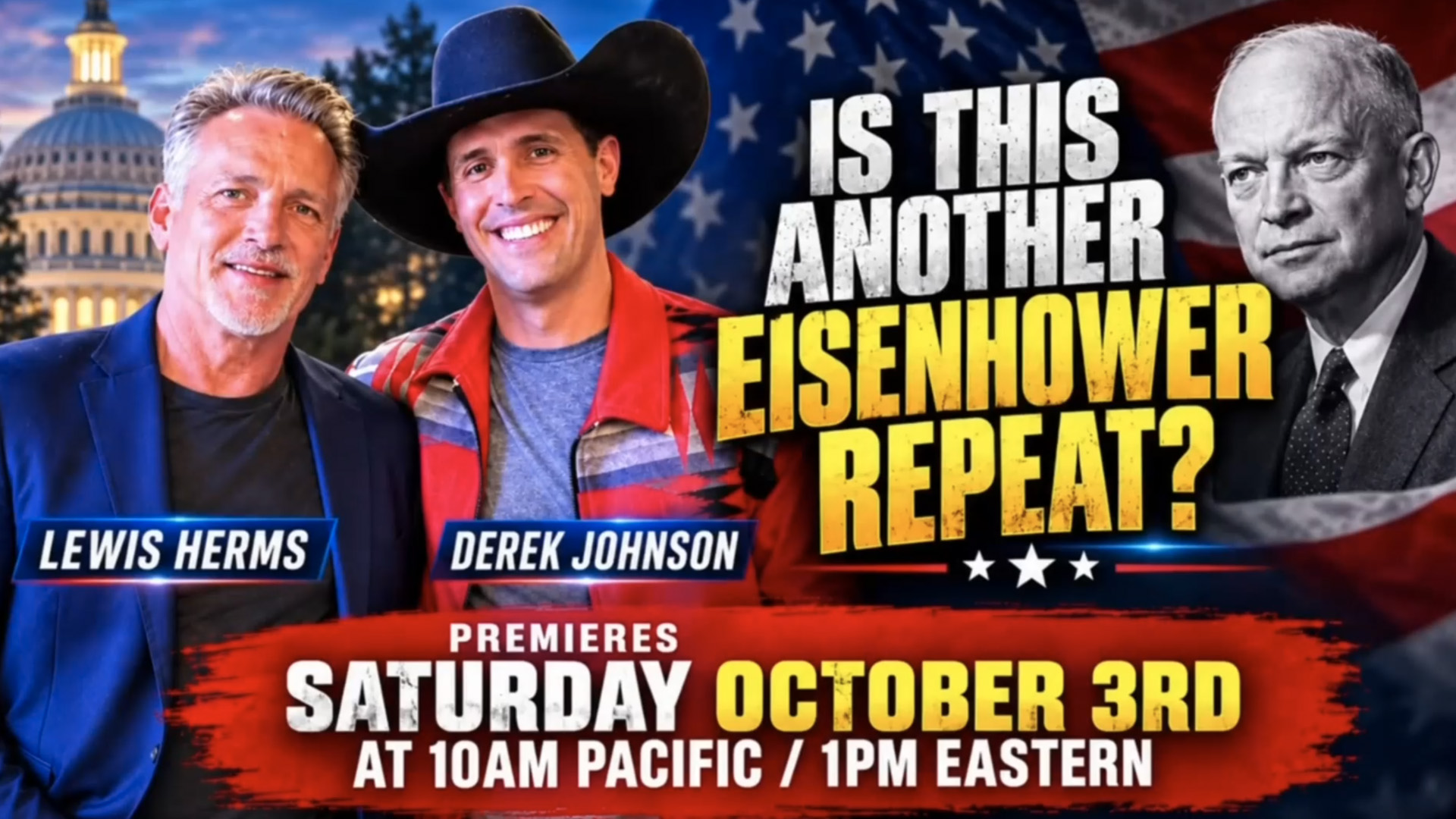
Recap of a Rumble interview between Lewis Herms and Michael Jaco
An independent investigation into LA County election fraud claims to have found a discrepancy hiding in plain sight: hundreds of thousands of ballots the U.S. Postal Service marked as undeliverable — some of which were still logged as voted.
That's the central claim Lewis Herms, a 2026 California gubernatorial candidate, laid out in a recent interview with retired Navy SEAL Michael Jaco, and it's worth breaking down on its own terms.
The 690,000-ballot discrepancy at the center of the LA County election fraud claim
According to Herms, his campaign designated an elections researcher, Christopher Gleason, to formally request ballot records from Los Angeles County.
Herms says he chose LA County specifically because of the public attention already on races there. What Gleason reportedly found: roughly 690,000 ballots in LA County were coded "UAA" — undeliverable as addressed, the U.S. Postal Service's label for mail that couldn't reach its destination.
Herms frames that number against a baseline: UAA rates, he says, typically run around 2% of ballots mailed. At LA County's total volume, 690,000 works out to roughly 11.8% — about six times what he'd expect.
The 130,000 ballots Herms says shouldn't have counted
The more pointed claim in the interview is about a subset of those undeliverable ballots — roughly 130,000, according to Herms — that were still recorded as voted. His argument: a voter whose ballot bounced back as undeliverable would normally need to actively contact the elections office, either to request a replacement or to cast a provisional ballot.
He estimates that normally happens for under 1% of affected voters, not the roughly 20% implied by the numbers he's describing.
Herms also says his team identified another 400,000 ballots that "appeared" in the county's records without a clear paper trail, and that a public records request for that batch was met with what he calls a "FOIA stall" — a 14-day extension — followed by silence.
What Herms says he's doing about it
Rather than stopping at a public accusation, Herms describes a specific legal escalation path he's pursuing:
- HAVA (Help America Vote Act) Title III administrator complaint, which he says he filed the week of the interview
- planned National Voter Registration Act (NVRA) complaint
- written preservation and retention demand aimed at LA County officials, to prevent records from being destroyed
- potential writ of mandamus filed in California Superior Court to compel the county to act
He also says he intends to send a public letter summarizing the findings to federal officials — naming, in the interview, FBI leadership, Kash Patel, and President Trump — and to publicize it broadly, framing it as putting the burden of a response on them rather than making the accusation himself.
Why this claim stands apart from broader fraud narratives
The conversation between Herms and Jaco ranges well beyond LA County — into disputed claims about wildfire causation, foreign interference in U.S. elections, and speculation about future executive action on the midterms.
Those threads reflect the hosts' broader worldview, but they're separate from, and less substantiated in the interview than, the ballot-record claim itself.
What distinguishes the LA County election fraud allegation is that Herms ties it to a specific, checkable data trail: FOIA requests, USPS UAA codes, and a formal HAVA complaint — a paper trail that, if the underlying records hold up, is at least independently verifiable, unlike the interview's more speculative segments.
The bottom line
Herms is explicit that he sees this as unfinished business, not a settled conclusion: the HAVA complaint is filed, the NVRA complaint is pending, and LA County's response to his public records requests has so far been limited.
Whether the 690,000-ballot and 130,000-ballot figures hold up under independent review is something only the underlying county records can settle — but the specificity of the claim, and the legal process Herms says he's now walking through, is what separates this from a generic fraud accusation.
OptimizePress Popup Overlay.
Enter your details below to get instant access to [enter lead magnet name here]
We process your personal data as stated in our Privacy Policy. You may withdraw your consent at any time by clicking the unsubscribe link at the bottom of any of our emails.